Medical Collection: Icons for Modern Design
In the fast-paced world of digital design, clarity is not just a preference; it is a necessity. Whether you are building a telemedicine app, designing a brochure for a local clinic, or creating educational materials for nursing students, the visual language you choose speaks volumes before a single word is read. This is where a comprehensive Medical Collection becomes an indispensable asset. It bridges the gap between complex healthcare concepts and immediate user understanding, offering a suite of visuals that are both aesthetically pleasing and functionally precise.
The challenge for many creators lies in finding resources that balance professionalism with creativity. Stock imagery can often feel cold or generic, while custom illustration is time-consuming and expensive. A curated set of medical icons offers the perfect middle ground. With high-quality assets at your disposal, you can elevate your projects from standard templates to polished, professional designs that resonate with your audience. The key is knowing how to leverage these tools effectively across different mediums and contexts.
Versatility Across Formats and Platforms
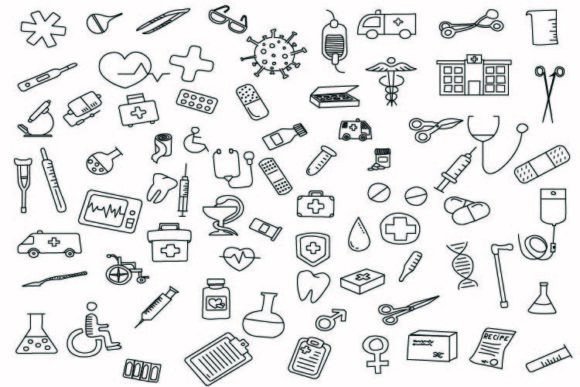
One of the most significant advantages of a robust icon set is its adaptability. Modern design workflows require files that perform equally well on a retina display, a printed flyer, and a scalable web interface. When you invest in a collection that includes 74 PNG files at 300dpi, you are ensuring crisp, pixel-perfect quality for any raster-based application. These high-resolution images are ideal for social media graphics, email newsletters, and presentation slides where quick deployment is essential.
However, true flexibility comes from vector formats. Including 74 SVG files in both vertical and horizontal orientations allows developers and designers to scale graphics infinitely without losing quality. This is crucial for responsive web design, where icons must adjust seamlessly to mobile screens, tablets, and desktop monitors. Furthermore, having access to 1 EPS file and 1 Ai (Adobe Illustrator) file with all designs provides the ultimate control for graphic designers. You can modify colors to match specific brand guidelines, adjust line weights for better visibility, or combine elements to create unique composite illustrations. This level of customization ensures that your medical visuals remain consistent with your overall brand identity, rather than looking like an afterthought.
Enhancing User Experience in Healthcare Tech
For entrepreneurs and developers working in the health-tech sector, user experience (UX) is paramount. Patients and practitioners alike need to navigate apps and portals with ease. A well-designed icon set simplifies this navigation. Imagine a patient portal where "Prescription Refills," "Appointment History," and "Lab Results" are represented by intuitive, clean icons rather than text-heavy buttons. This reduces cognitive load and makes the interface more accessible, particularly for older adults or those with visual impairments.
Using a diverse range of icons allows you to categorize information effectively. For instance, you might use distinct icons for different medical specialties—cardiology, pediatrics, dermatology—to help users quickly find the service they need. The inclusion of both vertical and horizontal orientations in the SVG files means you can adapt these icons to various UI components, from narrow sidebar menus to wide header banners. This attention to detail signals professionalism and care, qualities that are essential in building trust within the healthcare industry.
Educational and Editorial Applications
Educators and publishers also benefit immensely from high-quality medical graphics. Creating engaging learning materials requires visuals that explain complex biological processes or medical procedures clearly. Instead of relying on cluttered diagrams, instructors can use simple, elegant icons to break down information into digestible parts. For example, a biology teacher could use a series of icons to illustrate the steps of cellular respiration or the functions of different organs.
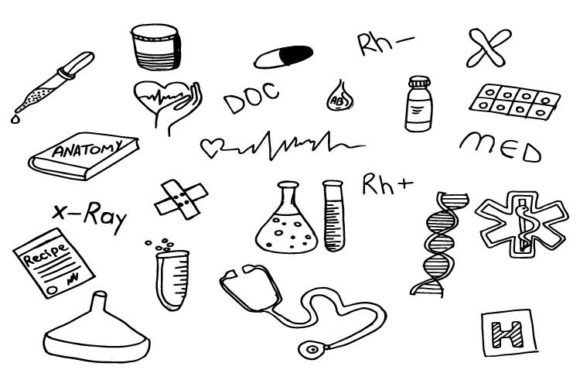
Bloggers and content marketers in the wellness niche can use these icons to break up long-form text, making articles more scannable and visually appealing. An article about "Top 5 Heart-Healthy Habits" becomes more engaging when each point is accompanied by a relevant, stylish icon. This not only improves readability but also increases the likelihood of social sharing, as visually rich content tends to perform better on platforms like Pinterest and Instagram. The JPG file included in the package serves as a quick reference sheet, allowing creators to preview the entire collection before selecting the perfect icon for their specific needs.
Branding for Small Businesses and Clinics
Small business owners, such as independent physiotherapists, dentists, or nutritionists, often operate with limited marketing budgets. A professional-looking brand identity is crucial for attracting new clients, but hiring a designer for every asset is not always feasible. A pre-made medical collection allows these professionals to maintain a cohesive look across all touchpoints. From business cards and letterheads to website favicons and social media profile pictures, consistent use of high-quality icons reinforces brand recognition.
By using the AI or EPS files, a small business owner can tweak the color palette to align with their clinic’s interior design or logo colors. This creates a harmonious visual experience for patients, from the moment they see an online ad to when they walk through the clinic doors. It demonstrates attention to detail and a commitment to quality, which can be a deciding factor for potential clients choosing between competitors.
Maintaining Consistency and Clarity
While having access to 74 unique designs is powerful, using them effectively requires discipline. To keep your designs clear and effective, adhere to a few core principles. First, maintain consistency in style. If you choose outlined icons, stick to that style throughout your project. Mixing filled and outlined icons can create visual clutter and confuse the user. Second, consider the context. Ensure that the icons you choose are universally understood. While creativity is valuable, ambiguity should be avoided in medical contexts where precision is critical.
Organization is also key. With multiple file formats available, keep your assets organized in folders by type (PNG, SVG, AI) and by category if possible. This saves time during the design process and ensures that you are always using the correct file format for the intended medium. Regularly review your designs to ensure that the icons enhance rather than distract from the core message. The goal is to support communication, not to overshadow it.
In conclusion, a well-curated Medical Collection is more than just a set of images; it is a toolkit for clearer communication. By leveraging the versatility of PNG, SVG, EPS, and AI files, creators across various industries can produce work that is not only visually stunning but also highly functional. Whether you are designing the next big health app, teaching a class, or branding a local clinic, these icons provide the foundation for professional, impactful design. Embrace the creative possibilities, stay consistent, and let your visuals do the talking.