Strategic Visual Communication: Leveraging the Handchuffed Vector Icon Illustration
In the complex landscape of digital communication, visual assets are rarely just decorative. They serve as cognitive shortcuts, conveying complex legal, ethical, or operational concepts in milliseconds. Among these assets, the handchuffed vector icon illustration occupies a specific and potent niche. While often associated with law enforcement or criminal justice, its application extends far beyond literal interpretations of crime. For entrepreneurs, marketers, educators, and compliance officers, this graphic element is a tool for signaling restriction, security, binding agreements, or liberation from constraints, depending entirely on context and design execution.
Understanding how to deploy a handchuffed vector icon illustration design template requires more than aesthetic judgment; it demands strategic foresight. The difference between a asset that clarifies your message and one that alienates your audience lies in intentionality. This guide explores the practical applications, design considerations, and strategic implications of using handcuff imagery in professional contexts, helping you make informed decisions that align with your broader business goals.
Defining the Asset and Its Strategic Utility
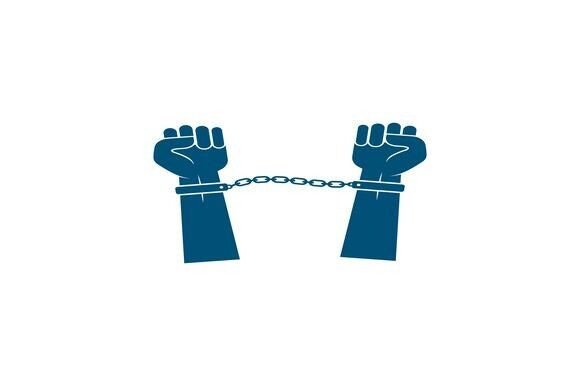
A handchuffed vector icon illustration is a scalable graphic representation of handcuffs, typically created using mathematical paths rather than pixels. This vector format ensures that the image remains crisp and clear at any size, from a tiny favicon to a large-scale billboard. However, the true value of this asset is not technical but semantic. It carries heavy symbolic weight.
When integrated into a handchuffed vector icon illustration design template, the icon can serve multiple strategic functions:
- Security and Protection: In cybersecurity marketing, handcuffs can symbolize the containment of threats, suggesting that malware or hackers are "locked up" and neutralized.
- Legal and Compliance: For law firms or regulatory bodies, the icon instantly communicates themes of justice, arrest, detention, or the consequences of non-compliance.
- Constraint and Limitation: In business consulting or productivity coaching, it can metaphorically represent being "handcuffed" by bureaucracy, debt, or inefficient processes.
- Agreement and Binding: Less commonly, but effectively, it can illustrate the binding nature of contracts or partnerships, though this requires careful tonal management to avoid negative connotations.
The versatility of the handchuffed vector icon illustration makes it a valuable component in a designer’s toolkit, but only if the user understands the psychological impact of the imagery. Unlike abstract shapes, handcuffs evoke immediate associations with authority, loss of freedom, or safety through containment. Ignoring these associations leads to mixed messaging.
Contextual Application: When and How to Use It
Deploying a handchuffed vector icon illustration design template without a clear objective is a risk. Before integrating this icon into your website, presentation, or marketing material, consider the following decision-making framework.
1. Clarify the Narrative Arc
Ask yourself: What story am I telling? If you are a financial advisor helping clients escape debt, an image of broken handcuffs might symbolize liberation. Conversely, if you are a data protection firm, intact handcuffs around a shield might symbolize robust defense. The state of the handcuffs—open, closed, broken, or locked—is as important as the object itself. A well-chosen handchuffed vector icon illustration should reinforce the narrative, not distract from it.
2. Assess Audience Sensitivity
Not all audiences respond to penal imagery in the same way. For a general consumer brand, using handcuffs might feel aggressive or ominous. However, for a B2B audience focused on risk management, the same icon signals seriousness and control. Always evaluate whether the visual metaphor aligns with your brand’s voice. A playful startup might find the imagery too heavy, while a legal tech platform would find it appropriate and authoritative.
3. Ensure Visual Harmony
A handchuffed vector icon illustration design template must match your existing design language. If your brand uses thin, minimalist line art, a bulky, realistic 3D rendering of handcuffs will clash. Consistency builds trust. Look for templates that allow customization of stroke width, color, and style. The goal is seamless integration, where the icon feels like a natural part of your visual ecosystem rather than an afterthought.
Design Considerations for Maximum Impact
While the concept is straightforward, the execution determines effectiveness. Here are practical tips for selecting and customizing your handchuffed vector icon illustration.
- Simplicity is Key: Icons work best when they are instantly recognizable. Avoid overly detailed illustrations that lose clarity at smaller sizes. A clean, simplified silhouette often communicates the idea more effectively than a photorealistic depiction.
- Color Psychology: Black and gray convey neutrality and seriousness. Blue suggests trust and corporate stability. Red can signal danger, urgency, or prohibition. Choose colors that align with the emotional tone you wish to evoke. For example, a bright blue handcuff icon might feel less threatening and more aligned with tech-security solutions than a stark black one.
- Scalability Testing: Since you are using a vector format, test the icon at various sizes. Ensure that the details—such as the chain links or the keyhole—remain visible and distinct even when the icon is reduced to 16x16 pixels for a browser tab.
- Metaphorical Pairing: Rarely should the icon stand alone. Pair it with complementary visuals. A handcuff icon next to a document suggests a binding contract. Next to a bug, it suggests virus containment. Contextual pairing reduces ambiguity.
Risks of Misuse and Strategic Pitfalls
Using a handchuffed vector icon illustration design template without strategic grounding can backfire. The primary risk is misinterpretation. If the context is unclear, viewers may associate your brand with criminality, oppression, or negativity rather than security or resolution. This is particularly dangerous for brands trying to build trust and approachability.
Another pitfall is cultural insensitivity. In some regions or communities, imagery related to incarceration carries heavy historical and social weight. Using such icons casually or decoratively can appear tone-deaf or offensive. Always conduct a sensitivity review, especially if your audience is global or diverse. If there is any doubt about the reception, consider alternative metaphors for restriction or security, such as locks, shields, or barriers.
Furthermore, overuse dilutes impact. If every section of your website features handcuff imagery, the symbol loses its power and becomes visual noise. Use it sparingly, reserving it for key moments where the concept of containment, restriction, or legal binding is central to the message.
Long-Term Value and Brand Positioning
When used intentionally, a handchuffed vector icon illustration contributes to long-term brand positioning. It helps establish your organization as serious, secure, and aware of the stakes involved in your industry. For legal, security, and compliance sectors, consistent use of appropriate iconography builds a visual vocabulary that clients come to recognize and trust.
From an operational standpoint, investing in high-quality vector templates saves time and resources. Instead of commissioning custom illustrations for every campaign, a versatile handchuffed vector icon illustration design template can be adapted across multiple platforms. This consistency reinforces brand identity and ensures that your visual communication remains cohesive as your business scales.
Ultimately, the decision to use this icon should be driven by clarity. Does it help your audience understand your value proposition faster? Does it reduce cognitive load? If the answer is yes, then the handchuffed vector icon illustration is not just a graphic element; it is a strategic asset. By approaching its use with thoughtfulness, respect for context, and attention to design principles, you can leverage this powerful symbol to enhance communication, strengthen branding, and achieve better business outcomes.
Remember, effective visual strategy is not about adding more elements; it is about choosing the right ones. Evaluate your needs, understand your audience, and select a handchuffed vector icon illustration design template that serves your goals with precision and integrity.