Streamlining Visual Communication with Creative Infographic Three Steps Clipart
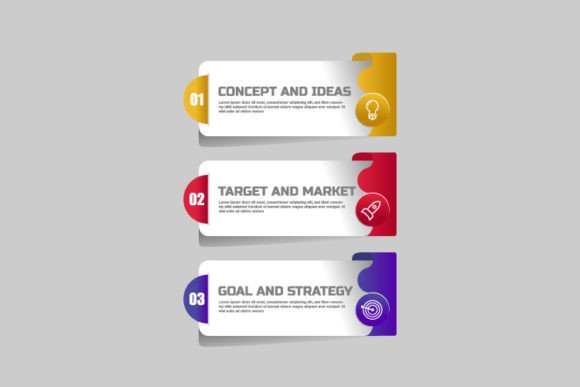
In the fast-paced world of digital content, clarity is king. Whether you are a small business owner trying to explain a service, an educator breaking down a complex concept, or a marketer designing a social media campaign, the ability to convey information quickly is invaluable. This is where Creative Infographic Three Steps Clipart becomes an essential tool in your design arsenal. It is not just about adding pretty pictures; it is about structuring information in a way that the human brain can process instantly.
The three-step structure is one of the most powerful frameworks in communication. It mirrors how we naturally think: beginning, middle, and end. Problem, solution, result. Past, present, future. By utilizing high-quality clipart designed specifically for this format, you remove the friction from your design process and focus on the message itself.
Why the Three-Step Framework Works
Human cognition has limits. When presented with too many steps or options, decision fatigue sets in. A three-step process is digestible. It feels achievable. When you use Creative Infographic Three Steps Clipart, you are leveraging a psychological shortcut that tells your audience, "This is simple. You can do this."
For entrepreneurs and freelancers, this is crucial. You might be explaining your onboarding process to a new client. Instead of a wall of text, you use a clean, visual three-step graphic. Step one: Consultation. Step two: Strategy. Step three: Execution. The clipart provides the visual anchor that makes these abstract concepts feel concrete and organized.
Versatile File Formats for Every Need
One of the biggest frustrations designers face is compatibility. You find the perfect graphic, but it does not work with your software. This resource solves that problem by providing a comprehensive suite of file formats: Ai, Eps, Png, Jpg, and Svg. Each format serves a distinct purpose in your workflow.
- Ai and Eps: These are vector files, ideal for professional designers using Adobe Illustrator or similar software. They allow you to edit every element, change colors to match your brand palette, and scale the image to any size without losing quality. This is perfect for large-format prints like banners or trade show displays.
- Svg: Scalable Vector Graphics are essential for web design. They load quickly and remain crisp on any screen resolution, from mobile phones to 4K monitors. If you are a blogger or web developer, this is the format you want for your online infographics.
- Png: With transparent backgrounds, Png files are the go-to for layering. You can drop these graphics directly into Canva, PowerPoint, or Photoshop without worrying about white boxes around the edges. They are excellent for digital presentations and social media posts.
- Jpg: Best for quick sharing or when file size is a concern. While they do not support transparency, they are universally compatible and easy to email or upload to platforms that do not accept other formats.
Real-World Applications Across Industries
The utility of Creative Infographic Three Steps Clipart extends far beyond corporate boardrooms. Let us look at how different users can apply these assets in their daily work.
Educators and Trainers
Teachers often struggle to keep students engaged with dense textual material. By integrating three-step visuals into lesson plans, educators can break down historical events, scientific processes, or literary structures. For example, a history teacher could use the clipart to illustrate the causes, events, and consequences of a major war. The visual cue helps students retain the sequence of events better than rote memorization.
Digital Marketers and Bloggers
Content creators know that engagement drops if an article looks like a wall of text. Inserting a relevant infographic breaks up the reading flow and keeps the eye moving. A lifestyle blogger might use a three-step graphic to summarize a morning routine, a recipe method, or a travel packing list. Because the files include Png and Jpg options, these can be easily inserted into WordPress or Medium without needing advanced design skills.
Small Business Owners
For local businesses, clarity builds trust. A gym owner might use the clipart to show the journey of a new member: Sign Up, Get Assessed, Start Training. A consultant could outline their service package: Discovery, Implementation, Review. Having these visuals ready in Ai and Eps formats means they can be customized for print brochures, business cards, or in-store signage, ensuring brand consistency across all touchpoints.
Design Considerations for Maximum Impact
While having the right tools is important, knowing how to use them effectively is what separates amateur designs from professional ones. When selecting and applying Creative Infographic Three Steps Clipart, consider the context of your audience.
First, think about color psychology. If you are in the healthcare sector, soft blues and greens convey trust and calm. If you are in fitness or sales, energetic reds or oranges might be more appropriate. Since you receive editable Ai and Eps files, you are not stuck with the default colors. Adjust the hues to align with your existing brand identity. Consistency builds recognition.
Second, maintain balance. The three steps should feel equal in weight unless you are intentionally emphasizing one stage over the others. Ensure that the text you pair with each step is concise. The clipart provides the structure, but your words provide the value. Avoid cluttering the graphic with long paragraphs. Use bullet points or short phrases instead.
Third, consider the medium. If you are designing for print, ensure you are using the high-resolution Eps or Ai files to avoid pixelation. For digital use, optimize your Svg or Png files for web speed. A slow-loading page can hurt your SEO rankings and user experience, negating the benefit of the beautiful graphic.
Enhancing Professionalism Without the Learning Curve
Many people hesitate to create infographics because they believe they need to be graphic designers. They worry about alignment, spacing, and vector paths. This clipart set removes those barriers. It provides a pre-designed, aesthetically pleasing foundation. You do not need to spend hours figuring out how to draw arrows or balance circles. The heavy lifting is done for you.
This efficiency allows you to focus on what you do best: creating content, teaching students, or running your business. It democratizes design, allowing non-designers to produce materials that look polished and professional. In a competitive market, this perceived professionalism can be the difference between a customer choosing you or your competitor.
Furthermore, having multiple formats ensures longevity. You might start with a simple Jpg for a social media post today, but next month, you might need to print a large banner for a conference. Having the original Ai file means you do not have to recreate the design from scratch. You simply open the file, adjust the size, and send it to the printer. This flexibility saves time and money in the long run.
Making the Right Choice for Your Project
Before downloading or purchasing, assess your specific needs. Do you need to edit the shapes? Then prioritize the Ai and Eps files. Do you just need to drop an image into a Word document? The Png or Jpg will suffice. Understanding the strengths of each file type ensures you get the most value out of the Creative Infographic Three Steps Clipart.
Also, consider the tone of your project. Is it corporate and serious? Or playful and creative? Choose the style of clipart that matches the emotion you want to evoke. The right visual language reinforces your message, while the wrong one can create cognitive dissonance for your audience.
Ultimately, these graphics are more than just decorative elements. They are communication tools that help you organize thoughts, guide viewers through a narrative, and present information with clarity and confidence. By integrating these versatile assets into your workflow, you enhance both the aesthetic appeal and the functional effectiveness of your content.